By Mikayla Tillery
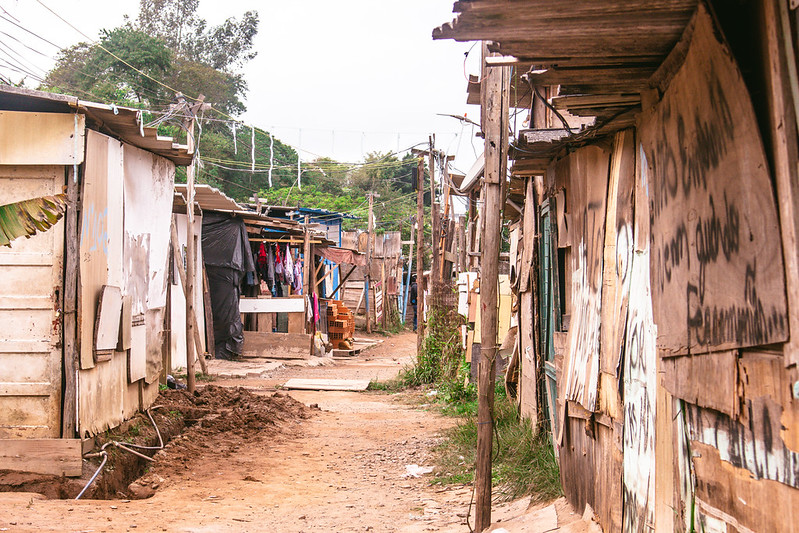
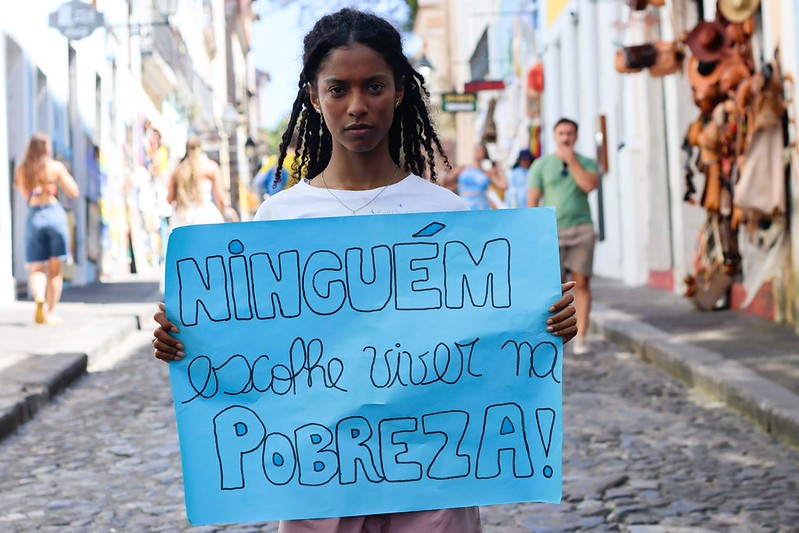
The U.S. Department of State has an unambiguous travel advisory for Americans visiting Brasil: “Do not travel” to informal housing developments – favelas, vilas, comunidades, or conglomerados – because of crime. Before I arrived in Brasil, this myopic view of favelas, perpetuated in every facet of American society – from popular media to official government publications – prejudiced me to think about favelas as blighted and hopeless. But, my work this summer as a research intern for TETO exposed me to an entirely different way of conceptualizing informal settlements in Brasil and what housing justice can look like when centering community governance models, co-creation, and collective decision-making.
This summer, I spent two months as a research intern with TETO Brasil, studying temporary emergency housing in favelas as a part of my Master of Public Policy at the University of Oxford’s Blavatnik School of Government. My research took me through the history of favelas, Brasil’s complicated land-tenure system, forced removals, and the increasingly urgent intersection between housing and climate justice. More than 16 million Brasilians live in informal settlements, and my report ultimately argued that emergency housing can be an essential intervention when legal and bureaucratic barriers make permanent construction impossible – but that it must also be connected to a longer-term vision of housing security.
Then, after spending weeks writing about housing construction, I actually had to build a house.
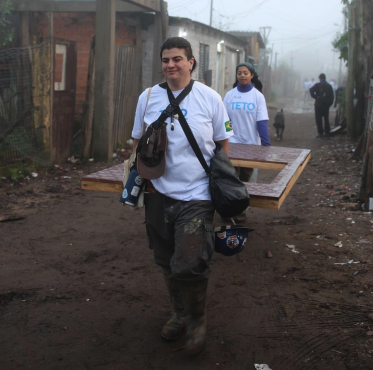
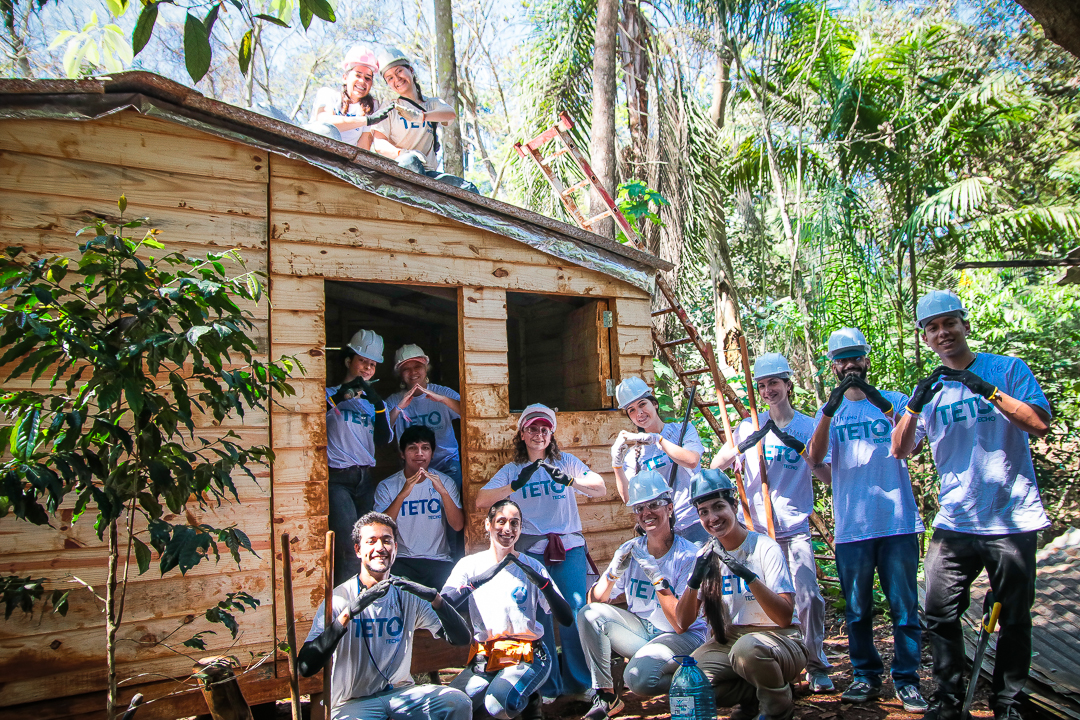
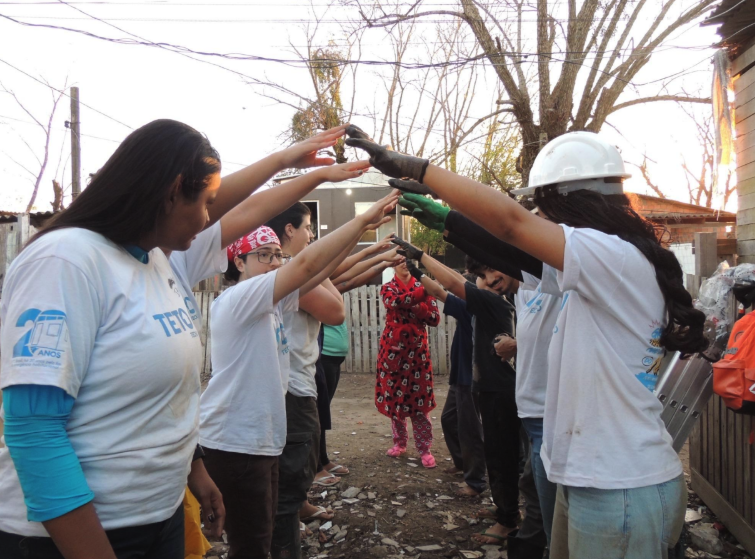
For four days, I worked alongside TETO volunteers and residents in Vila Nazaré, a favela on the outskirts of Porto Alegre, constructing two wooden homes. I learned to hammer floorboards, carry wall panels, level foundations (and scream “Nivel!”), and accept whatever construction-related words I thought I understood in Portuguese, I probably did not.
That experience made the abstractions of my report suddenly tangible. Vila Nazaré is a community that has endured decades of housing insecurity. At its peak, roughly 1,300 families lived there, but more than 1,000 families were subsequently removed as Porto Alegre expanded the nearby airport. Many were relocated without meaningful plans for transportation, employment, or childcare. More recently, the catastrophic 2024 floods in Rio Grande do Sul exposed another dimension of that insecurity: climate disasters do not distribute their consequences equally. My research found that residents of Vila Nazaré remain particularly vulnerable to flooding while major resilience investments are concentrated in higher income areas of Porto Alegre. But spending four days in Vila Nazaré taught me something my research alone could not. Calling a place an informal settlement describes its legal status; it does not describe the capacity of these communities to collectively organize in pursuit of community needs.
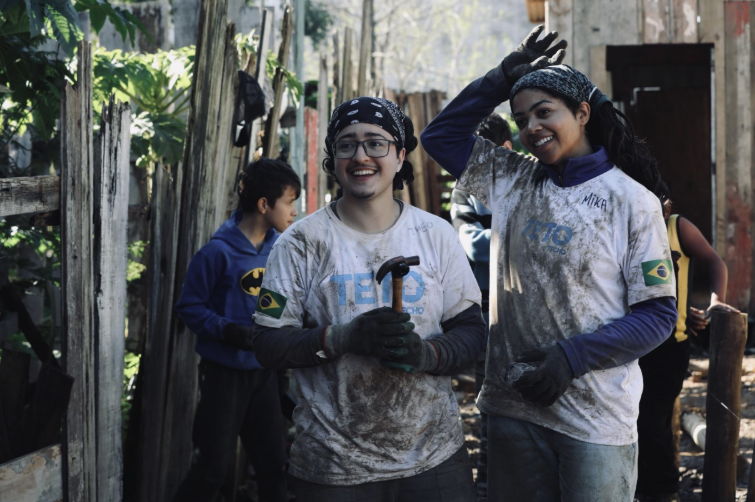
Construction was profoundly communal. We ate lunch in our Havianas together, struggled through language barriers together, and eventually watched walls go up where, hours earlier, there had only been piles of gravel and wood. TETO’s model deliberately puts community members alongside volunteers in the construction process, an approach rooted in the principle that residents themselves should be at the center of upgrading their communities. The houses of course mattered, but more so did the process of building them. That complicated my understanding of what “helping” a community means. My report is critical of treating temporary housing as an endpoint. A wooden emergency house cannot solve insecure land tenure, inadequate municipal infrastructure, or decades of government neglect. TETO itself operates within those constraints: without secure tenure and conventional building permits, permanent NGO-led construction is often legally infeasible. Yet the inadequacy of a temporary solution does not make the immediate need for one disappear. For a family living in unsafe housing, the difference between a leaking structure and a resilient emergency home is not theoretical.
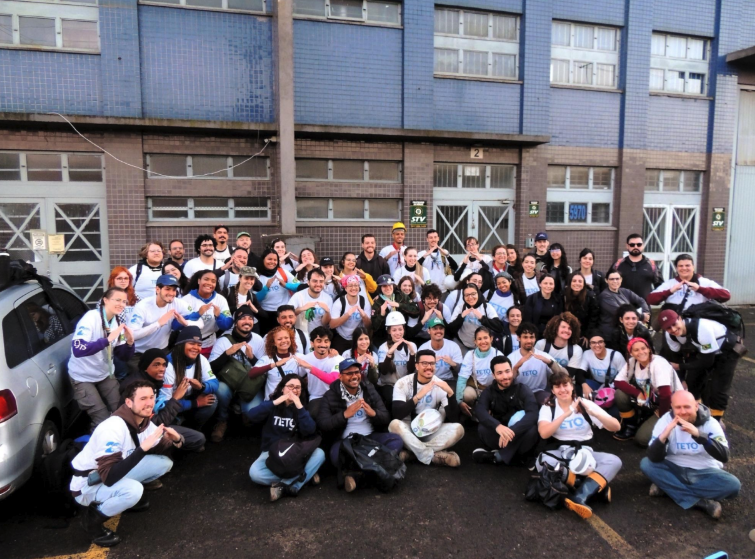
If I had listened only to the Department of State, I could have remained in the Disneyland-esque tranquility of Leblon without ever critically interrogating the assumptions I had brought with me to Brasil. I would have understood Vila Nazaré primarily through what outsiders said it lacked. Instead, I came away thinking about what was already there: families, friendships, humor, organization, knowledge, lived experience, and a profound attachment to place in spite of state neglect and hostility. My summer in Brasil left me with a more complicated understanding of housing justice – one that recognizes both the urgency of improving someone’s home today and their right to something more permanent tomorrow.
* Mikayla Tillery is a Master of Public Policy candidate at the University of Oxford’s Blavatnik School of Government and was a Research Intern at TETO Brasil from July to August 2026.